I have a small, stubborn habit every October. Just as the light starts to thin and I reach for a heavier sweater, I start missing summer in a way that has very little to do with the weather. It is not the heat I miss. It is the version of myself that only seems to exist between June and September: the one who stays up too late, who says yes too quickly, who believes that a single season can rearrange a whole life. So when Netflix announced that production has officially wrapped on This Summer Will Be Different, Carley Fortune's sun-soaked romance about a love that returns summer after summer, I felt that familiar ache arrive right on schedule, even though the show itself has not arrived at all.
Let me start, as I always try to do when adaptation news makes my heart run ahead of the facts, with what is actually confirmed. This Summer Will Be Different is the series adaptation of Fortune's 2024 bestselling romance novel of the same name. It will be ten episodes long. It stars Sophie Nélisse as Lucy Ashby, Francesca Reale as Bridget, and Roby Attal as Felix. It comes from creators and showrunners Dane Clark and Linsey Stewart. Filming began in August 2026 and wrapped in October 2026. On October 23, 2026, Netflix shared a behind-the-scenes photo of Nélisse on set, holding a clapperboard with the show's title on it, and that small, ordinary image did what a polished trailer cannot yet do: it made the adaptation feel real, finished in the sense that the cameras have stopped rolling, and still wonderfully unfinished in every way that matters to a reader waiting at home.
The logline, as Netflix has described it, is disarmingly simple. This is a simmering, sun-soaked romance set across multiple summers on Prince Edward Island, about Lucy, a young woman navigating her twenties and her first real love with her best friend's brother, the one person she was never supposed to fall for. I love that the description does not try to dress the premise up. It does not promise a twist, a mystery, or a grand revelation. It promises time. Multiple summers. A woman in her twenties, which is to say a woman old enough to know better and young enough to do it anyway. And a boundary that was drawn, presumably for very good reasons, by friendship itself.
That last part is why I keep coming back to this story, and why I think this adaptation is worth watching closely even before we have a trailer. The best-friend's-brother trope is one of the oldest machines in romance, and like all old machines, it only works when you can hear every part moving. The tension is never really about whether two people are attracted to each other. Attraction, in a good romance, is the easy part. The tension is about cost. If Lucy reaches for Felix, what happens to Bridget? If she does not, what happens to the part of herself that has been waiting, summer after summer, for permission to want something plainly? A story that takes place across multiple summers understands that this is not a question you answer once. You answer it, and then you live with the answer, and then a new summer arrives and asks you again, slightly differently, because you are slightly different too.
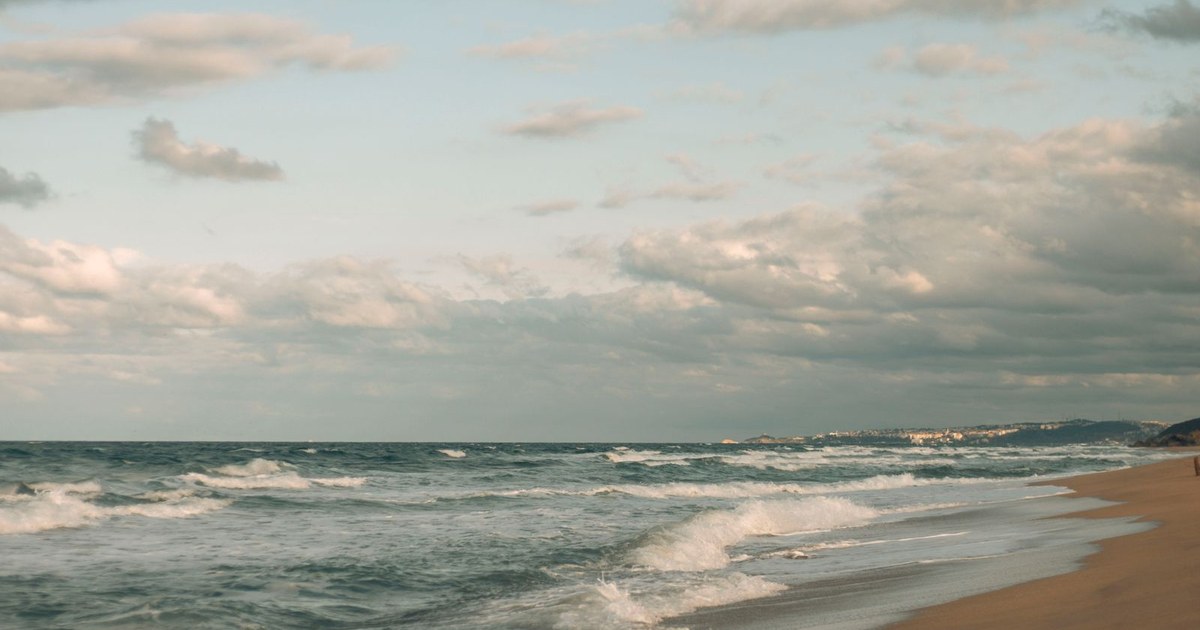
That is also why the setting is not decoration here. Prince Edward Island is not a pretty backdrop that could be swapped for any other coastline without changing the story. Fortune herself has said that she first fell in love with the island in the pages of L. M. Montgomery's Anne of Green Gables, and again when she visited with her best friend in her early twenties. She has described that vacation, the beauty of the island, the warmth of its people, and the friendships that sustain us, as the foundation of This Summer Will Be Different, and she has said she wants to transport audiences to the glittering shores and windswept beaches of Prince Edward Island. I find that lineage quietly moving. A writer falls in love with an island through a book, then visits it with her best friend, then writes a book about a woman whose most important relationships are tangled up with that same island, and now that book is becoming a series filmed in the place itself. There is something circular and generous about that, as if the story keeps handing its own inspiration forward.
It also gives the adaptation a particular responsibility. A summer story filmed on location carries a different kind of pressure from a summer story built on a soundstage. The light has to feel earned. The wind has to do some of the storytelling. The audience has to believe that these characters would keep coming back, year after year, not because the plot demands it but because the place has become part of who they are. When a production wraps, I always wonder about the last day on location, the last time the cast stood on that shore as those characters, knowing they would not be called back tomorrow. I do not know what that day looked like for this cast, and I will not invent it. But I do know, as a reader, what it feels like to leave a beloved place at the end of a summer: you spend the whole journey home already rehearsing your return.
There is one more piece of confirmed news that I want to hold carefully, because it is the piece most likely to be misread in the excitement. The show has yet to receive an official release date. Wrapping production is a real milestone, and it is absolutely worth celebrating, but it is not the same thing as a premiere. After filming comes the long, invisible work of editing, sound, music, and all the small decisions that turn footage into a series. So if you see a date floating around online attached to this show, check where it came from before you repeat it. For now, the honest sentence is the simplest one: filming is done, and we are waiting. Waiting, in romance, is not a passive state. It is the whole genre, practised in real life.
That waiting also puts this adaptation in an interesting position for Carley Fortune's readers. Her debut novel, Every Summer After, was recently adapted into the Prime Video series Every Year After, which premiered in June and has been renewed for a second season. That means Fortune is not arriving on screen as an unknown quantity. She is arriving as a writer whose summer stories have already proven they can survive the journey from page to screen, and whose readers have already learned what it feels like to watch a beloved summer get reinterpreted by actors, directors, and a camera. I do not think that makes This Summer Will Be Different a safe bet, exactly. Every adaptation is its own negotiation, and a second adaptation carries its own expectations. But it does mean we are not guessing entirely in the dark about tone. We know Fortune writes summers that linger. We know her stories are built on longing that accrues slowly, rather than on a single dramatic reveal. The question now is how ten episodes, rather than two hours, will let that longing breathe.
Ten episodes matters, and I want to sit with that number for a moment. A film has to compress a multi-summer romance into a shape you can hold in one sitting. It has to choose which summers matter most and let the others blur. A ten-episode series can afford a different rhythm. It can let a summer end without resolving anything. It can let Lucy be twenty-two in one episode and a slightly different person, with slightly different defences, in the next. It can show us Bridget not only as the reason Lucy hesitates, but as a person in her own right, with a friendship worth protecting and a life that does not exist merely to complicate someone else's romance. That, to me, is the real promise of this format. Not more plot, but more room: room for the friendship to feel as consequential as the romance, because in the story, it is.
I am also thinking about Lucy herself, as Nélisse will play her. The reports describe Lucy Ashby as a woman in her twenties navigating her first real love, and I find myself protective of that phrasing. First real love is a tender, slightly terrifying category. It does not mean first crush, or first kiss, or first summer fling. It means the first time wanting someone rearranges your sense of what is allowed, what is loyal, and what is honest. A performance of that kind of love cannot rely on grand gestures alone. It will live in hesitations, in glances that last half a second too long, in the way Lucy talks to Bridget when Felix is in the next room. I have not seen a frame of this performance, and I will not pretend to judge it. But I know what I will be watching for when the trailer finally arrives: not whether Lucy and Felix look beautiful together, because of course they will, but whether the camera understands that their story is also Bridget's story, and that every summer they share is borrowed from a friendship that came first.
So what do I plan to do while we wait? The same thing I always do when an adaptation I care about wraps filming. First, I will reread, but slowly, and not all at once. A multi-summer novel deserves a multi-evening reread. I will pay attention this time not only to Lucy and Felix, but to the summers themselves: which details repeat, which details change, and what those changes say about who Lucy is becoming. Second, I will resist the urge to treat every behind-the-scenes photo as a clue. A clapperboard is not a spoiler. A costume is not a plot point. The pleasure of waiting is partly the pleasure of not knowing yet, and I would rather arrive at the trailer with my imagination intact than with a collection of half-guesses I have mistaken for knowledge. Third, I will keep an eye out, patiently, for the two announcements that actually matter next: a trailer, and a release date, in that order, from Netflix itself. Everything else is noise, however well-meaning.
And finally, I will let myself feel the October version of this story. It is easy to think of a summer romance as something you only read in summer, as if longing had a season. But I have always believed the opposite. Summer romances are often best read, or reread, when summer is over, because that is when you understand what the characters are really afraid of losing. Not the heat. Not the beach. The feeling that, for a few weeks a year, life was larger, braver, and more honest than it usually is. This Summer Will Be Different has wrapped filming, which means that feeling is one step closer to reaching a screen. It has not arrived yet, and that is all right. Some summers are worth waiting for, and some stories, I suspect, are worth missing a little before you have even seen them.