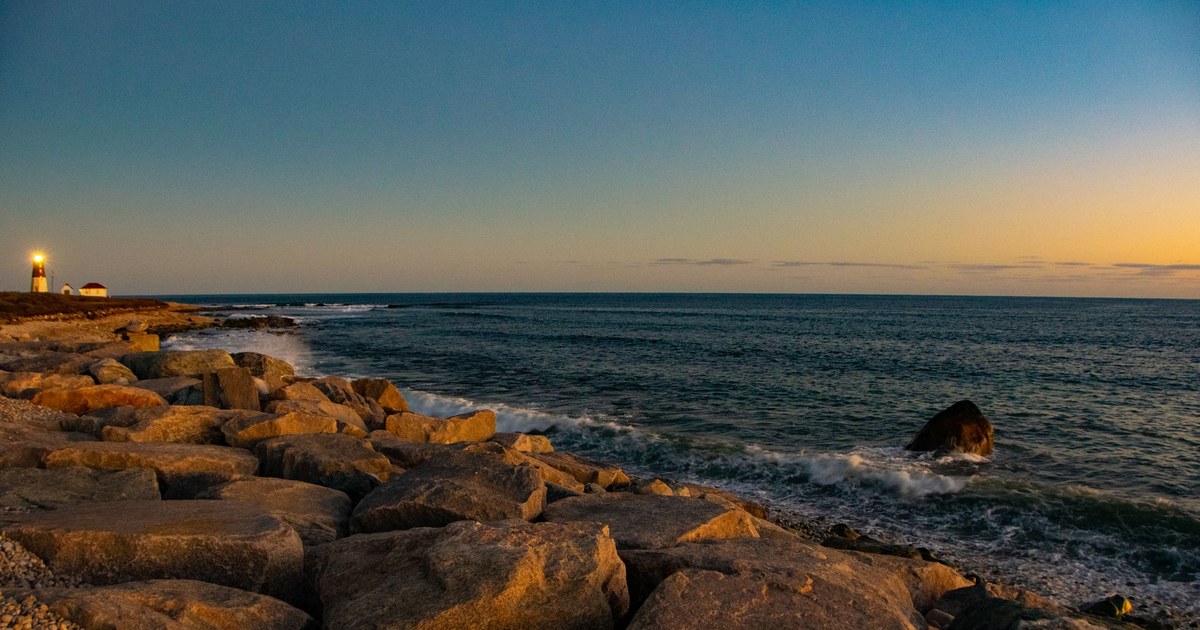
I watched the new trailer for Remain twice on Monday night, and then I did the thing I always do when a trailer leaves me unsure what I just watched: I went and checked what the book actually is. Because the first thing you need to know about Remain is that there are two of them, and they are not the same object wearing two outfits. They are two versions of one story, built at the same time, by two people who are famous for completely different kinds of endings.
Warner Bros. released the full trailer on Monday, November 16. It runs two minutes and thirty-five seconds, which is eighteen seconds longer than the teaser that came out on September 8, and those eighteen seconds do a lot of work. The teaser sold a mood. The full trailer sells a problem. Jake Gyllenhaal plays Tate Gordon, a reclusive architect who moves to a small coastal town on Cape Cod to finish designing a summer home for his best friend. He meets Phoebe Dynevor's Wren, and the film's own synopsis says she pulls him out of his shell and into the centre of a deadly mystery hanging over the town. The first half of the trailer plays like a sunlit New England love story. Then the music drops out, a mirror gets involved, and the man who made The Sixth Sense reminds you exactly whose film this is.
The film opens in North American theatres on February 5, 2027, with international dates starting February 3. That date is itself part of the story. Warner Bros. originally had Remain down for October 23, 2026, a Halloween slot, and moved it in February of this year. TheWrap reported the move was driven by the romantic storyline and by strong presales for the studio's Wuthering Heights. Read that plainly: the studio looked at a film built from a Nicholas Sparks story and decided it belonged in the Valentine's Day corridor, not the horror corridor. That is a bet about what this film is, and it is a bet the trailer now has to pay off.
So what is it, exactly? The honest answer is that the two men who made it cannot quite agree, and that disagreement is the most interesting thing about the project. Shyamalan and Sparks developed the original story together, and then each of them went away and wrote his own version of it independently. Shyamalan wrote the screenplay and directed the film. Sparks wrote the novel, which came out in October 2025 and became a No. 1 New York Times bestseller. Sparks is an executive producer on the film, and James Newton Howard composed the score. But the two versions are parallel works, not a book and its adaptation in the usual sense. Sparks told Variety that he and Shyamalan had even discussed whether the two versions should share the same ending and the same twist, which means the ending of one does not settle the ending of the other.
That matters more than it usually would, because of the names. In the book, Gyllenhaal's character is called Tate Donovan. In the film, he is Tate Gordon. A renamed lead is a small thing on its own, and adaptations rename characters all the time, but here it reads like a marker: these are two separate tellings, and the film is not obliged to follow the book home. If you read the novel between now and February expecting a shot-by-shot preview of the film, you are going to be disappointed in exactly the wrong way. The novel is a preview of the story's shape, not of its surprises.
The shape, as far as the book's own synopsis gives it away, is this. Tate is grieving his sister's death and has recently come out of a psychiatric facility when he arrives on Cape Cod. His late sister, the book adds, could see spirits. That is the detail that changes everything about the trailer, once you know it. Wren is not just a woman Tate meets in a small town. The trailer's clearest implication, and the one every piece of coverage this week has landed on, is that Wren appears to be a ghost. The film never says so outright in the footage. It does not have to. A bathroom mirror scene, a wound on Tate's chest that he examines in the glass, a love story that keeps sliding sideways into a haunting: the trailer is built to make you ask the question, and then to refuse to answer it.
Shyamalan, for his part, seems to know exactly what he is doing with that refusal. On the same day the trailer went out, he posted a short video to his own YouTube channel and wrote that the trailer is not just marketing. "It's the beginning of telling the story," he said. That is a director telling you, in advance, that the trailer is part of the film's design rather than a summary of it, and it is worth taking him at his word, because it changes how you should watch the thing. The trailer is not a list of scenes you will see in February. It is the first act of a story that will not finish until the film opens.
Here is where I land, after a night with the trailer and the book's premise side by side. There are two ways this film can go wrong, and they are opposites. The first is that the Sparks half wins and the ghost is only decoration on a love story that could have existed without her, in which case the mirror scene is a trick and the audience that came for a haunting leaves feeling cheated. The second is that the Shyamalan half wins and the romance is only bait for a twist, in which case the readers who loved the novel for its tenderness leave feeling cheated instead. The trailer, to its credit, refuses to tell you which one it is. The first half is pure seduction, in both senses of the word, and the second half is pure unease, and the film's job between now and February 5 is to convince both audiences that they are watching the same story.
For readers, the practical question is simpler, and it is the one I always come back to with a book and a film arriving sixteen months apart. Read the novel first, or wait for the film? The novel is out now, it topped the bestseller list, and it is the only version of the story you can actually hold in your hands today. But because the two versions may not share an ending, reading the book will not spoil the film in the usual way, and it will not guarantee you either. What it will do is give you the shape of Tate's grief and the terms of Wren's mystery before the film reframes them, and that is a better reason to read it than any spoiler warning. If you like your romances with the supernatural kept at arm's length, read the book and decide from there. If you like your ghost stories with a love story at the centre, the trailer is already enough to put February 5 on your calendar.
I have not read the novel yet, and I am not going to pretend the trailer is a review. What I can say, after watching it twice, is that this is the first trailer in a long time that made me want to read the book and see the film for different reasons, rather than one reason twice. The book promises a grieving man and a woman who may be dead. The film promises a director who thinks a trailer is the beginning of a story. February is a long way off, and there will be more trailers. But the question the film has to answer is already on the table, and it is a good one: when a love story and a ghost story are built from the same first sentence, which one do you end up believing?