My teenage self had a very firm theory about romantic comedies, and it went like this: if a film ended with a grand gesture in the rain, or a prom, or a speech in front of a crowd, then it had told the truth. Everything else was just decoration. I believed this with the confidence of someone who had never actually been to a prom, never stood in the rain in a dress, and never had to say anything brave in front of a crowd. I had simply watched a lot of films in which other people did those things beautifully, and I had mistaken beautiful for true.
Lynn Painter's Liz Buxbaum would have understood me completely, which is probably why I liked her book the first time I read it and why I am a little nervous, in a good way, about the film now. Netflix's adaptation of Better Than the Movies has officially wrapped filming, and that small production word — wrapped — carries more weight than it sounds like it should. It means the cameras have stopped. It means the story now exists in footage rather than in plans. It also means we are entering the long, quiet stretch where readers like me have nothing to do but wait, re-read, and argue with our younger selves about what we actually want from the ending.
Here is what is confirmed, before my feelings run ahead of the facts again. Director Julia Hart confirmed on Instagram on October 24, 2026, that filming had wrapped, after a near two-month shoot in Chicago, Illinois. On October 28 she followed that post with a tribute to the film's crew, calling them a wonderful group of human beings who care deeply about their jobs and deeply about each other, and saying she was forever changed for knowing them and working with them. Production Weekly had reported that the film would shoot in Chicago from September 3, 2026, through October 21, 2026, based at The Fields Studios, and the shoot ultimately ran a few days beyond that scheduled end date. The film is directed and co-written by Hart, with Jordan Horowitz and Heather Flanders co-writing the screenplay. It is an adaptation of Painter's number one New York Times bestselling young adult novel of the same name. Netflix has not announced an official release date. One outlet expects a release sometime in summer or fall 2027, but that is an expectation, not an announcement, and I am going to keep those two things separate in this piece because the gap between them is where most adaptation disappointment is born.
The cast is where this stops being a routine production update and starts feeling personal, at least to the readers who followed the casting. Beatrice Kitsos plays Liz Buxbaum and David Iacono plays Wes Bennett, and they were the first names confirmed, on July 31, 2026, after what Netflix described as a buzzy talent search and passionate fan casting. Kitsos had been a popular fan pick for months, and had even posted on Instagram asking Netflix to let her audition, writing simply, "Pls let me audition." Painter gave the pairing her enthusiastic approval the same day the casting was announced, posting on Instagram that the chemistry was insane and that Kitsos and Iacono might actually be more Wes and Liz than the Wes and Liz in her own head. I love that detail, not because an author's approval guarantees a good film — it does not, and every reader knows a beloved author who has praised an adaptation that later fell flat — but because it tells you something about how this particular casting happened. It was not handed down from nowhere. Readers were already picturing someone, arguing about someone, rooting for someone, and then the someone they were rooting for got the part. That is a rare, slightly dangerous kind of goodwill for a film to carry into post-production. It raises the stakes in the best possible way: people are not just curious about this Liz and Wes. They already feel a little protective of them.
The rest of the ten-member cast fills out the world around them in a way that makes me trust the film's sense of scale. Deacon Phillippe plays Michael Young, the crush at the centre of Liz's plan. Nicole Bruner plays Jocelyn, Luke Kirby plays Brian Buxbaum, Judy Greer plays Helena, Claire Coffee plays Martha Buxbaum, Ora Duplass plays Laney Morgan, Veronica Garrubbo plays Alex, and Kynlee Heiman plays Young Liz. The remaining eight cast members were announced on September 3, 2026, as cameras began rolling in Chicago. I am not going to pretend I can judge a performance from a cast list, and I am certainly not going to rank these actors against the versions in my head, because the versions in my head are seventeen years old and unreliable narrators. What I can say is that a ten-person principal cast, announced in two clear waves rather than dribbled out as rumour, suggests a production that knew what shape it wanted. This is not a film trying to be everything to everyone. It is a film about a girl, a neighbour, a crush, and the small circle of people who watch all three of them make a mess of things.
That mess is the whole point of the book, and it is also the reason the book is harder to adapt than it looks. Netflix describes the film as a rom-com that pays homage to all the romance tropes — fake relationship, enemies to lovers, boy next door — before turning them on their heads. The fuller synopsis makes the shape clear. Liz is a hopelessly romantic teenager who gave her heart to Michael a long time ago. He never really saw her before he moved away. Now he is back in town, and Liz will do whatever it takes to get on his radar, even befriend Wes Bennett, the annoyingly attractive next-door neighbour who has only ever been a pain to her since they were children. Pranks involving frogs and decapitated lawn gnomes do not, as the synopsis dryly notes, a potential boyfriend make. Yet somehow Wes and Michael are hitting it off, which means Wes is Liz's way in. As Liz and Wes scheme to get Liz noticed by Michael so she can have her magical prom moment, she is shocked to discover that she likes being around Wes. As they grow closer, she must reexamine everything she thought she knew about love, and rethink her own ideas of what happily ever after should look like.
Read that synopsis slowly and you will see why my teenage self would have misread this book completely. She would have treated the prom moment as the destination, the proof that the story had worked. The book treats it as a question. Liz does not start out wanting a real relationship. She starts out wanting a scene. She has a catalogue of scenes in her head, borrowed from the films she loves, and she is trying to cast herself in one of them, with Michael in the male lead and herself finally, at last, noticed. Wes is supposed to be a supporting player in that production, a useful friend with access to the boy she actually wants. The slow, uncomfortable comedy of the novel is watching Liz discover that the supporting player is more interesting than the lead she wrote for herself, and that the scenes she rehearsed in her head do not survive contact with a real person who teases her, annoys her, and then, inconveniently, listens to her. That is a story about growing out of your own taste, which is a much braver story than a story about getting the boy. It asks the reader to do what Liz has to do: admit that the version of romance you learned from films might have been a beautiful draft, not a finished truth.
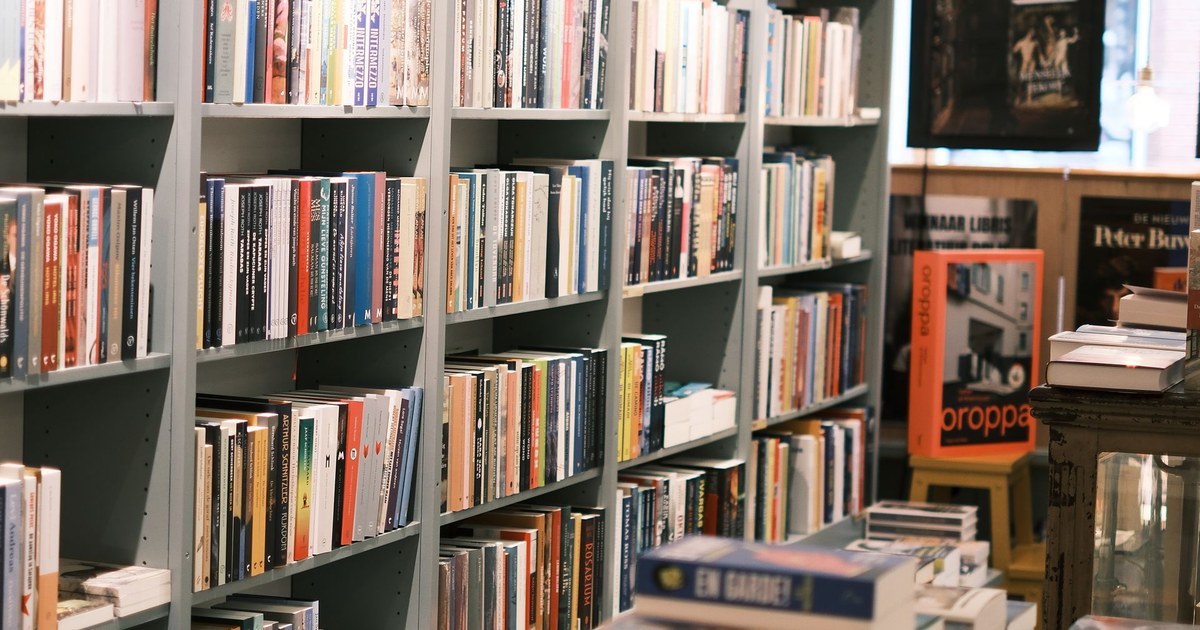
That is also why the Chicago shoot matters to me more than a generic location credit usually would. Local reporting in early October caught the movie filming at Town House Books and Cafe in St. Charles, outside Chicago, a real bookshop that looks, by all accounts, like it walked straight out of a romantic comedy. I am wary of reading too much into a single location — a bookshop in a film can be set dressing, nothing more — but for this particular story, a bookshop is not neutral ground. Liz is a reader before she is anything else. Her ideas about love come from stories, and stories live in places like that, in rooms full of shelves where someone else has already imagined a better ending for you. Filming a rom-com about a girl who learned romance from films inside an actual bookshop feels, at the very least, like a production that understands where its heroine's imagination was formed. It also gives the film something a studio backlot cannot quite fake: the particular light of a Midwestern autumn, the particular ordinariness of a town that is not trying to be picturesque, just trying to be itself while a camera rolls past. Painter is an Illinois native, and Hart's wrap post talked about the Midwest and its extraordinary inhabitants stealing her heart, and about how there is a reason Painter's stories live there. That is the kind of sentiment directors post when a shoot ends and everyone is tired and fond of each other, so I am not going to build a whole theory on it. Still, I liked reading it. It sounded less like marketing and more like someone who had spent two months somewhere and noticed it.
So what does wrapping actually mean for the rest of us, the readers waiting at home with no trailer, no poster, and no date? It means the film is now in post-production, which is the least photogenic and most consequential phase of any adaptation. This is when the performances get shaped, the music gets chosen, the scenes that worked on the page get tested against the scenes that work on screen, and the jokes that landed in a Chicago bookshop either survive the edit or quietly disappear. It also means the wait changes character. While a film is shooting, every set photo and every Instagram post feels like progress, because something is visibly happening. Once filming wraps, progress becomes invisible for months. That invisibility is hard on readers, and it is where speculation rushes in to fill the silence: invented release dates, imagined trailers, confident claims about scenes nobody outside the edit room has seen. I am going to try not to add to that noise. There is no trailer yet. There is no official date yet. There is a finished shoot, a named cast, a director who has now made her third film for Netflix, and a book that already knows exactly what it thinks about grand gestures.
Here is what I am actually waiting for, and it is not a date on a calendar. I am waiting to see whether the film trusts Liz's confusion. The easiest version of this adaptation would tidy her up: make Michael a little less distant, make Wes a little less annoying at the start, make the prom moment arrive on schedule and resolve everything cleanly. The harder version — the one the book earns — lets Liz be wrong for a while, lets her chase the wrong scene with complete sincerity, and lets the audience feel both the charm of that chase and its cost. I want the film to keep the frogs and the lawn gnomes, not because pranks are inherently cinematic, but because they are evidence. They are proof that Liz and Wes have a history that predates romance, a history made of irritation and proximity and childhood, which is a much sturdier foundation for a love story than a meet-cute. I want the film to keep the moment when Liz realises she likes being around Wes, and to let that realisation be awkward rather than triumphant, because in real life that is how it usually arrives: not as a speech, but as a small, inconvenient warmth you notice while you are busy planning something else.
My teenage self would have wanted the film to give Liz the prom she dreamed of, exactly as she dreamed it, with Michael noticing her at last. My present self wants something less tidy and more honest. I want Liz to get a prom, certainly — the book understands why that night matters to a seventeen-year-old, and I am not so grown up that I have forgotten — but I want her to arrive at it having learned that a magical moment is not the same thing as a good relationship, and that the boy standing next to you matters more than the scene you are standing in. If Hart's film understands that distinction, then the long wait through post-production will have been worth it. If it does not, we will still have the book, and we will still have the argument, and honestly, arguing with my teenage self about what a good ending is might be the most faithful way to love this story anyway.
Until there is a trailer, I am going back to the book, and to the particular pleasure of knowing that somewhere in an edit room, Liz and Wes now exist in footage, mid-scheme, mid-prank, mid-misunderstanding, waiting for the rest of us to catch up with them. That is what wrapping means, when you strip away the production language. The story has been filmed. Now it has to be found, cut by cut, in the material that Chicago gave it. I will be here when it is found, probably re-reading the prom scene and trying, one more time, to explain to seventeen-year-old me why the best romantic comedies are not the ones that end with a gesture. They are the ones that teach you to want something better than a gesture. This one, if it stays true to its book, already knows that. Now we wait to see whether it shows it.